
What A Difference These Differences Make
Recovering Satellites So to Speak

It’s been a big week, as I should have expected given that last Saturday was a 3 2 1 Day, as explained in the 3/21 post, along with a poem. My sister even texted me about liking the poem and about being sure the 3 2 1…meant GO! She’s tended to have a part in these ideas, as you might have noticed, and today I’m going to try to bring in one more a bit more seriously than I have in the past. It’s about building boats, actual boats.
Now I’m remembering way back to an early poem about This Project. It started out “Annnnnddd…BANG! And spring sprang! With a big bang! And the birds had no words, but they sang and sang. And BANG! …repeating several times with different critters and ending up with an orangutan named Rangy whose mate had just birthed a son, and Rangy was very happy, celebrating, so…“Rangy, Dang!” was the end of the fun part.
Then the poem got serious about the trouble with the dichotomous and reductionist Rationalism vs. Romanticism for us humans, having so much more to consider than the critters do in our role as stewards of the place. Spring did spring with a bang this year, and something Significant has happened almost every day since.
I just realized I haven’t talked about Convergences here for a long time—here in this real-life story behind The Story of Stu. And as regular readers know, The Story of Stu is “actually” being written by two characters that Bug Stu made up himself, having sensed that I might never get it done and maybe no one would care anyway, if it was I that was trying to make Bug Stu real.
The two characters, Rhettie and Wally, are our kids’ ages, which is our former students’ ages, which is the ages of most of my new young colleagues since 2019, which is late thirties to late forties, aka Late Gen X and Early Millennials. And that, as I realized last week on international Tolkien Reading Day, of course (Stu would say) (the day the Ring was destroyed and so on), means these hundreds of Purdue Gen Z kids I see attending The Chapel are roughly the ages of my former students’ kids(!) in many cases.
And the whole possibly-distracting-to-me story behind the story took a weird turn back in 2019, seven years ago, when I wrote on the (dry-erase) wall in a planning meeting that “d is for delta; d is for…duuuude.”
My “d is for…duuuude” was a nod to the student idioms many of you will remember during my teaching days, which I tended to do a lot of, those nods, teasing them. But when I used that phrase in 2019 it also meant something was emerging, which I knew I’d have to figure out later. That something was in the first expression, “d is for delta”, meaning change, meaning a difference, in the mathematical language I was also nodding to, partly because of, you know, Purdue, right nearby. Would that capital delta be equilateral or isosceles, was the question—either is considered correct.
For some time, we’ve all been hearing about making a difference, especially in the social-entrepreneurial world. It became a kind of mantra, and I tend to not like social mantras like that. For me, for This Project, I’d been saying I wanted it to make a different kind of difference for many years.
I kind of knew what everyone meant by making a difference, and I felt like their kind of difference making assumed that other things, maybe bigger things, shouldn’t be different instead, or also, having more impact even. Are we asking the right questions even, was my question.
Now I think I’m finally understanding what that delta was all about, at least in the Stuian sense, and my thinking about The Chapel phenomenon (certainly new for Purdue) has made me go through ten years of thoughts and potentials, back to the year that Bug Stu first appeared to me, already ten years ago and little but words to show for it. It’s a lot. There are a lot of words. Pie, Bright Spots, and Boats is how I’d probably explain it all now, not that I am yet. Regular readers know that the delta is an isosceles triangle.
I told one of the pastors I’d first met at MatchBOX that I’d have something for him, a sort of description, but there’s some meta stuff I also needed to explore as I delved into it all again. What is the point. What is the goal, now, for this different kind of difference, because the thought environment we’re in has changed these past several years, as one should expect.
Conveniently, all these Convergences started with March, meteorological spring (not astronomical spring, which was 3/20). It started with attending the Indiana Horticulture/Small Farms Conference put on by Purdue Extension, which was also where This Project started in the very beginning, before Bug Stu even, exploring alternative “farm economics” beyond commodities, mostly looking at brambles, fruit trees, and aquaculture back then, combined with a kind of productive getaway. A reset, I called it, not a retreat, something I’ve called Functional Fringes since the beginning.
Finally for this section, speaking of making different kinds of differences, something has clicked in my mind recently, having to do with how I was paying attention to ideas and sources of happiness in my own life, a domain of our minds that’s not particularly conscious. I referred to this as salience landscaping in the 2/28 issue, fitting timing since meteorological spring would start the next day. Maybe it was prompted partly by taking Jeanne down to campus on occasion lately.
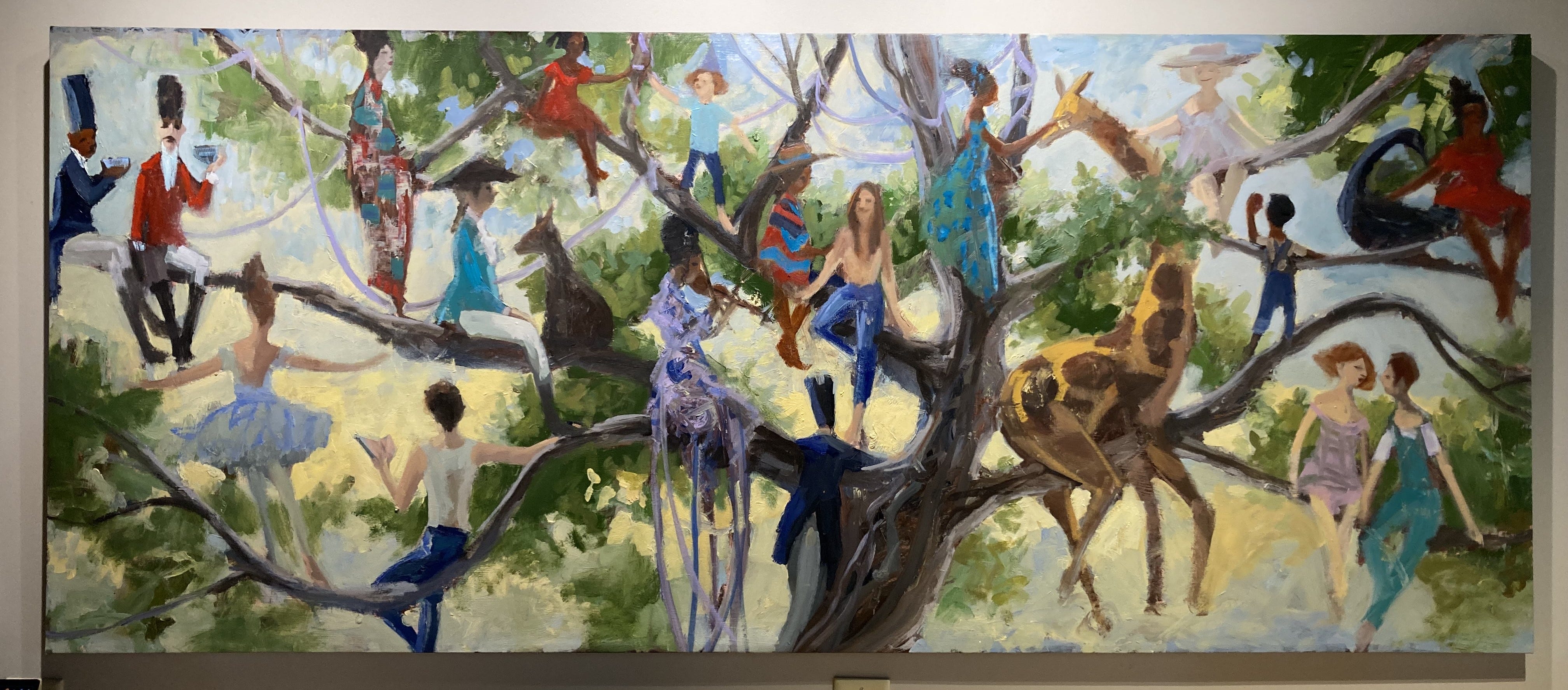
Maybe The Kids Started It
I mean that in so many ways, in good ways. Our own two kids made us realize, pre-internet even, that their lives, their happiness, their effects on others, were going to depend a lot on what they were paying attention to, which is pretty much an environmental issue, physically and imaginally, not just some kind of mental discipline thing, even as adults. This always stuck in my mind, and it’s partly where The Wildflower Effect came from in the previous issue.
But they also maybe started it when they were home a few weeks ago and made my own mind sort of “come home,” not by some deliberate decision I made but something…organic I guess. It can get away again, and it has briefly already, but generally I’m focusing on “home” again and not on whatever other dopamine-driven distractions I’d indulged in, mistaking them as salient. It’s been some change in my environment, I’m sure, I just don’t understand exactly what changed, not entirely. Maybe you’ve been through this.
But it reminded me of the implications of environments, and the importance of understanding our parents’ or our kids’ or our acquaintances’ environment—not like a classic social worker would, and not the compassionate presumption which has become popular (I can’t digress), but like, well maybe like what Bug Stu would do.
And we wouldn’t want to leave out our own environment, of course, as we wonder about what we’re paying attention to and how to exercise our options, so to speak, since intention is only a small and unstable first step, at least for most humans. We’re often looking for giant leaps, right? Or maybe we could be? (I see a lot of signs with this theme around Purdue, as you can imagine, ever since their 150 Years campaign in…2019.)
Here’s Where Stu Starts
If you know much about Bug Stu, you’ll expect him to get to the music as quickly as he can. He’s not one of those four (audibly) (to us) singing insects, but he loves music, especially ours. And he loves our minds, and our eyes. He sees stars in our eyes, and flowers.
And he knows that for most baggies (invertebrates for him) and bonies (vertebrates), having our humie minds would be like an unmanageable AI upgrade or psychedelic trip (neither of which either of us would recommend given the risks and safer alternatives). But we have our minds for a reason, and with reason comes responsibility, including the responsibility of understanding them and the influences on them. Like with music. No, it never takes him long to get to the music.
We only have time for the first part of this poem today, which is a sort of analysis, or a synthesis, and a nuanced generational correlation, providing opportunity for greater generational connection even, through particular artists in the more alternative scene, not that some of those bands didn’t become big names with big hits.
Stu sees an arc from the beginnings of Rock ‘n’ Roll in the early 1950s to 1984, which would cover the later formative years of great-grandparents and the grandparents of Gen Z, generally. The changes in those first thirty years of Rock ‘n’ Roll were much greater than those of our last thirty years, not that he assigns a lot of significance to that—except this.
Neither Gen Z’s parents nor grandparents could really relate to the great-grandparents’ Rock ‘n’ Roll from the first ten years, say 1954 to 1964. It became easier after that, and post-Sixties-counterculture meant later generations could all pretty much relate on life’s questions, even if they disagreed strongly about a workable Shangri-La or even a need for such a concept.
The music swung as wildly as the mores did after 1964, much of it for the sake of wildness branding, or a story that justified whatever other basic motivations were in play. But by 1984, after a long list of things and taxonomies that music nerds itch to argue about, there was a kind of stabilization that allows us more available bandwidth with which to understand a lot of things, as Stu put it.
To my great satisfaction, Stu assigns this landing to R.E.M., who started out as a college crowd band before rising to the status of (suspect) general tastemaker/moralsmaker in the late 80s. The musical stability remained intact though, not all attributable to R.E.M., of course, as there were clearly air currents that allowed R.E.M. the landing they and we enjoyed.
As the subtitle said, this is all headed toward recovering our satellite nature as has been mentioned recently here and as was hinted at in Counting Crows’ song “Recovering the Satellites,” we have finally figured out.
Poor Stu maybe…I mean maybe he’s synthesizing this whole thing out of his desire to see music do what it could do, in a positive way, from saving us from The Machine to saving us from the Stralfs, which he refers to as the trolls, the Villains, or the Foes of Flourishing, depending on the hour.
Aside from marketers’ machinations about generational differences, there’s never been a time in these last hundred years when two or three generations could connect so well. Unfortunately, connections within the youngest generations have become more difficult, due to the atomization of musical offerings, yet another societal Nuclear Option, as Stu puts it, initiated by the Foes of Flourishing. Again, I can’t digress, at least not today.
The Point (and The Poem) of Today
There’s a pretty beautiful playlist on Spotify for this. I didn’t want to make a bunch of links, so I made one playlist. 11 songs. About 45 minutes long—album length, come to think of it. Only two of the songs are from the 70s. They weren’t hits, but they’re important in this story, or these layers of stories. Stu agrees. You don’t have time for all that, but if you take a look at the titles you might recognize some phrases Stu uses in his poem. So, from a beetle’s compound eye perspective:
Landing Together
Formations in the soil,
but soon formations in the sky.
It’s always in the air somehow.
The How, and I ask Why.
From their parents’ music,
if there was a muse or two around…
The industry had changed so fast,
but then it had slowed down.
Thirty years is not
the thirty years it was before.
’96 to ‘26 has changed much less,
not more.
From ‘54 to ‘84, The King
to R.E.M.
and their Reckoning,
their questioning
what had been left to them.
The jangle sound had been around
for thirty years or more,
but it was lyrical distinctions,
not mere sensualized southern lore.
The throwback sound said something, too,
a common theme those years,
evidently there was hunger
for the playful and sincere.
But soulful? Woeful? Sexual?
Trolls know this country well,
and they know that certain humies
can entrance and cast a spell.
R.E.M. made Reckoning
in 1984,
to help you see,
own your own figuring,
know more won’t get you more.
Two more albums, similarly,
on deconstructions, pageantry,
a South-to-Midwest pre-campaign
of sense and sorrow,
loss, no gain.
Well gain, yes, attention-wise,
then sophistry came to town.
Michael’d hinted at the evils,
now he’d come to tear them down.
Politics and stones and sticks,
weapons in each line,
and MTV to politicize
what’s wise and otherwise.
No, you can’t count on Rock ’n’ Roll,
to guide you well, not as a whole,
but there are, in the rare exception,
useful lights, since its inception.
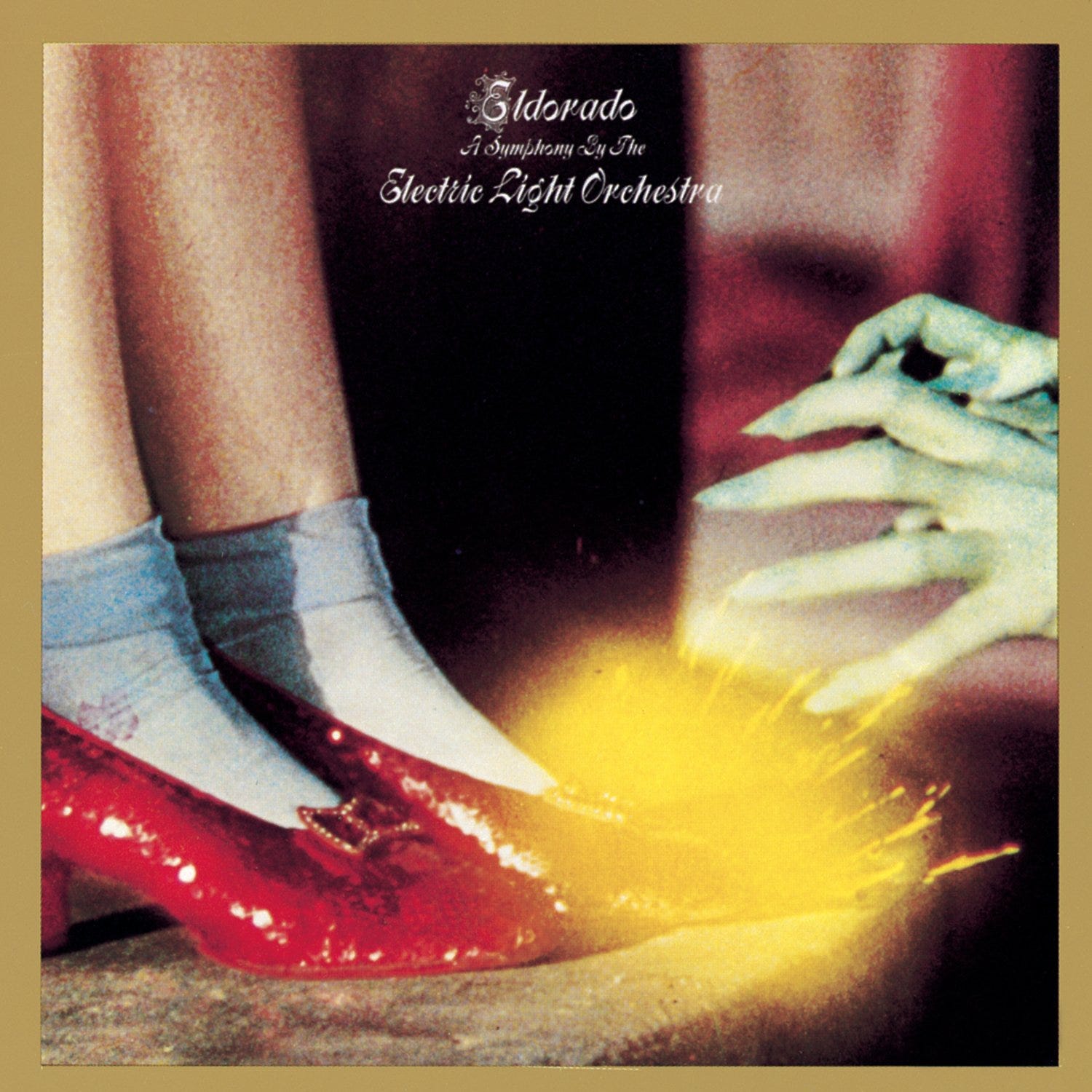
R.E.M. was almost there,
to end the first fraught arc.
You’d seen what Solomon
tried to say,
and those slippers clearly sparked.
There’d be no Eldorado that could
do you any good,
and forever chasing more,
well trolls, the Stralfs,
knew that you would.
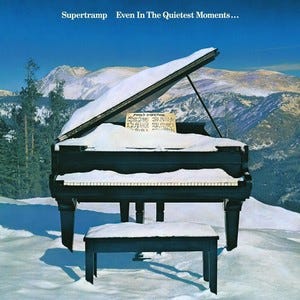
And even in the quietest moments
songs were in your mind,
not just God, the caring Star Eyes,
but earthly hymns of another kind.
Sex and drugs and Rock ‘n’ Roll,
and a pot of gold, for free.
You’d think it’d take a cleverer troll,
as I’d thought, a bit hopefully.
But Dionysus has his way,
a foggy scene, some hips that sway,
deep thumps and hums
for the vulnerable masses,
elixirs, rums for the sheep,
dumb asses.
If you are sheep then quite cerebral.
I see you more as dogs,
in a good way, friends of Son of Man,
wary of swamps and bogs,
though you’ll go in as needed there,
footing poor, nose to the air
alerting you in every sniff
of alien scents and troll mischief.
Like me with my antennae here,
it’s not quite clear,
but there’s trouble near.
Despite the gift of massive brains,
some humies seem ill-suited
for detecting hacking aliens
and the systems they’ve recruited:
The drive for safety, drive for love,
the drive for happiness…
the drive for reproduction, mating,
sense of some success.
Can’t you see you’re satellites?
Not just sitting on the ground,
but in the sky and loved by Earth,
and by design, and heaven-bound.
Bound up there with sunrises,
and sunsets for the nights,
when they have just the stars or Moon,
to glow, ensure night lights.
And clouds can never block their light,
not nearly, way up there,
and their signal won’t require sight.
Above but on the air.
Signals on the air, indeed.
If I were you I’d pray, I’d plead,
because once the Villains
splashed down, landed,
stations and Star Eyes
seemed shorthanded.
Sex, drugs, and Rock ‘n’ Roll…
Apollo foresaw aliens’ toll,
expecting aid from Artemis.
But even they, with foes like this,
depend on Star Eyes deep inside,
and up above, where lives abide.
You thought that your technologies
would keep you safe from harm,
could make things be,
could set you free,
no surprises, no alarms…
But that’s not where the story ends,
you’ve sensed it all these years.
Your earthly feet…the Earth subtends
the form that brings the tears.
Your head is toward the sky, upright.
You’re meant to live with stars.
You cling to Earth, a satellite,
the distance heals your scars.
Think of all the Good things,
look away from tempting Tolkien’s rings.
Ask yourself what Good you’ll find
where you spend your time,
where you’ll find your mind.
To be continued
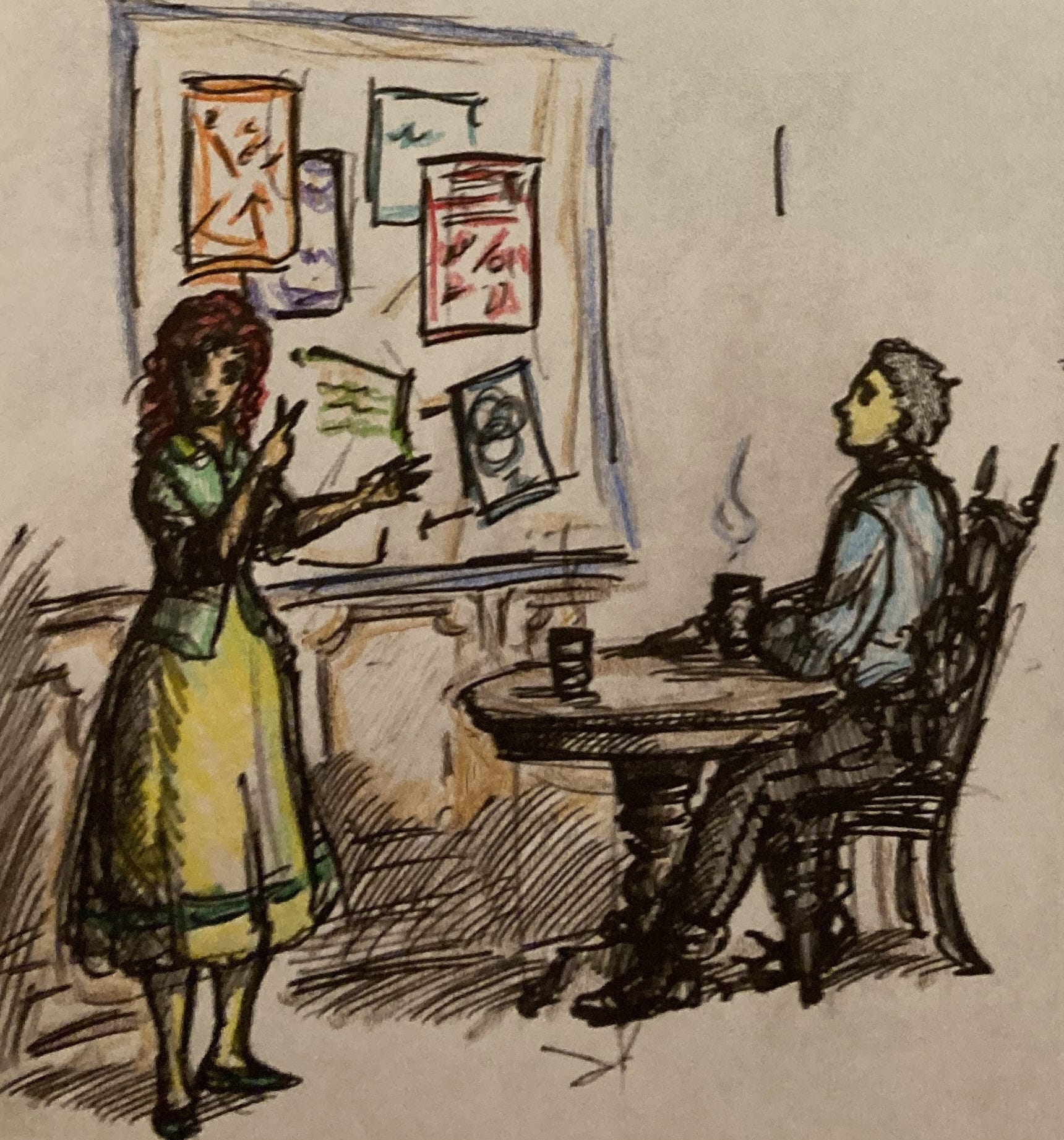
Next time I’ll get into Pie, Bright Spots, and Boats, which is apparently where this all is headed, in one story mode or another, or maybe in more than one.
Thanks for reading : ).
Tim